
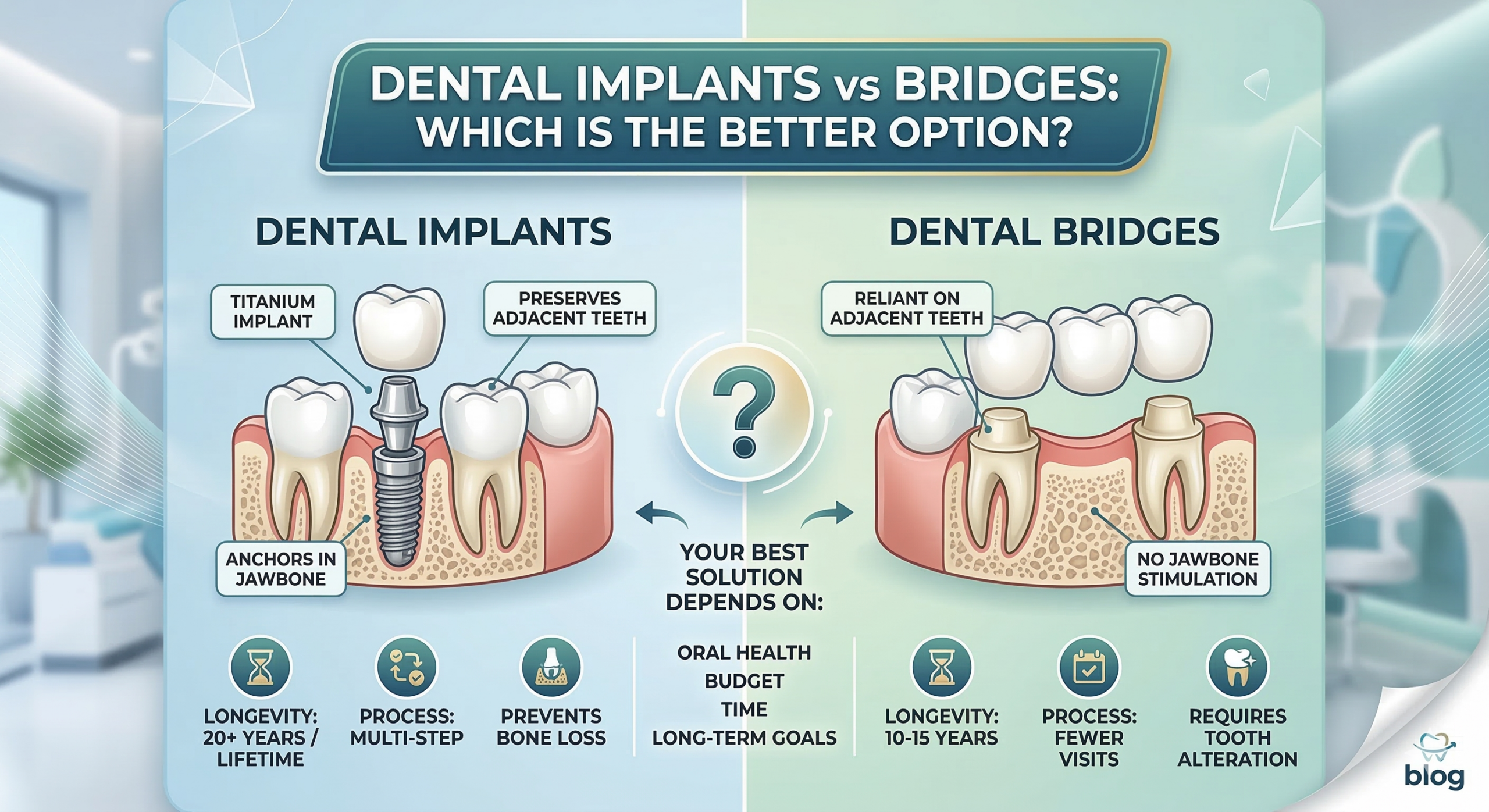
Dental Implants vs Bridges: Which Is the Better Option?
When you lose a tooth, choosing the right replacement option can feel overwhelming. Two of the most commonly recommended solutions by dental professionals are dental implants and dental bridges. Both are effective, but they differ significantly in terms of procedure, longevity, cost, and impact on surrounding teeth. Whether you are exploring your options after a recent extraction or planning ahead, understanding these differences is key to making an informed decision. If you are in Uttar Pradesh and considering treatment, visiting a trusted dental implant clinic in Lucknow can help you get a professional evaluation tailored to your specific dental needs.
This blog breaks down both options in simple terms so you can walk into your next dental appointment with confidence.
What Are Dental Implants?
A dental implant is a small titanium screw that is surgically inserted into the jawbone to act as an artificial tooth root. Once the implant bonds with the bone through a natural process called osseointegration, a custom-made dental crown is placed on top, creating a replacement tooth that looks and functions just like a natural one.
Implants are a standalone solution — they do not rely on neighboring teeth for support. They are considered the closest thing to a natural tooth in modern restorative dentistry.
Implant Procedure Overview
The process typically involves three stages:
- Surgical placement of the titanium post into the jawbone
- A healing period of three to six months for osseointegration
- Attachment of the abutment and final crown
What Are Dental Bridges?
A dental bridge is a fixed restoration that literally “bridges” the gap left by a missing tooth. It consists of one or more artificial teeth (called pontics) held in place by crowns that are cemented onto the adjacent natural teeth, which are called abutment teeth.
Bridges are non-surgical and can usually be completed in two dental visits, making them a quicker and often more affordable solution in the short term.
Bridge Procedure Overview
- The adjacent teeth are filed down to accommodate the crowns
- Impressions are taken and sent to a dental lab
- The bridge is fitted and permanently cemented in place
Key Differences Between Dental Implants and Bridges
Here is a side-by-side comparison to help you quickly understand the core distinctions:
| Factor | Dental Implants | Dental Bridges |
| Procedure | Surgical | Non-surgical |
| Timeline | 3–6 months | 2–3 weeks |
| Bone preservation | Yes | No |
| Affect nearby teeth | No | Yes (filing required) |
| Lifespan | 20+ years / lifetime | 10–15 years |
| Upfront cost | Higher | Lower |
| Maintenance | Brush & floss normally | Special flossing needed |
Pros and Cons of Each Option
Dental Implants
Pros:
✓ Closest to a natural tooth in look, feel, and function
✓ Preserves jawbone and prevents bone loss
✓ Does not damage adjacent healthy teeth
✓ Long-lasting — often a lifetime solution with proper care
✓ Easy to maintain with regular brushing and flossing
Cons:
✗ Requires surgery and a longer treatment timeline
✗ Higher upfront cost compared to bridges
✗ Not suitable for patients with severe bone loss (without grafting)
Dental Bridges
Pros:
✓ Quicker treatment — completed in just two visits
✓ Lower initial cost, making it more accessible
✓ No surgery required — suitable for patients who cannot undergo implant surgery
✓ Proven and well-established procedure
Cons:
✗ Requires alteration of healthy neighboring teeth
✗ Does not prevent bone loss in the gap area
✗ May need replacement every 10–15 years
✗ Cleaning under the bridge requires special floss or tools
Which Option Is Better for You?
There is no universal answer — the right choice depends on your individual dental health, lifestyle, budget, and long-term goals. Here are some general guidelines:
Choose dental implants if: you have adequate jawbone density, are in good overall health, want a permanent long-term solution, and are willing to invest more upfront for superior results. Implants are especially recommended for younger patients who want a solution that will last decades.
Choose a dental bridge if: you need a quicker, more affordable solution, are not a candidate for surgery due to health conditions, or do not have sufficient bone density for an implant. Bridges are also a practical choice when the teeth adjacent to the gap already need crowns.
In terms of long-term value, dental implants generally come out ahead — they last longer, preserve oral health more effectively, and eliminate the need for future replacements. However, bridges remain a reliable and practical option for the right patient.
Conclusion
Both dental implants and bridges are excellent solutions for replacing missing teeth — each with its own set of advantages depending on the patient’s circumstances. While implants offer greater longevity and bone preservation, bridges provide a faster and often more cost-effective alternative.
Ultimately, the best decision is one made in consultation with a qualified dental professional who can evaluate your specific condition. If you are in the region, seeking guidance from the best dental clinic in Lucknow will ensure you receive an honest, personalized recommendation based on your oral health, medical history, and budget.
Do not delay your decision — the sooner you replace a missing tooth, the better your chances of preserving the health of your surrounding teeth and jawbone. Book a consultation today and take the first step toward restoring your smile.